


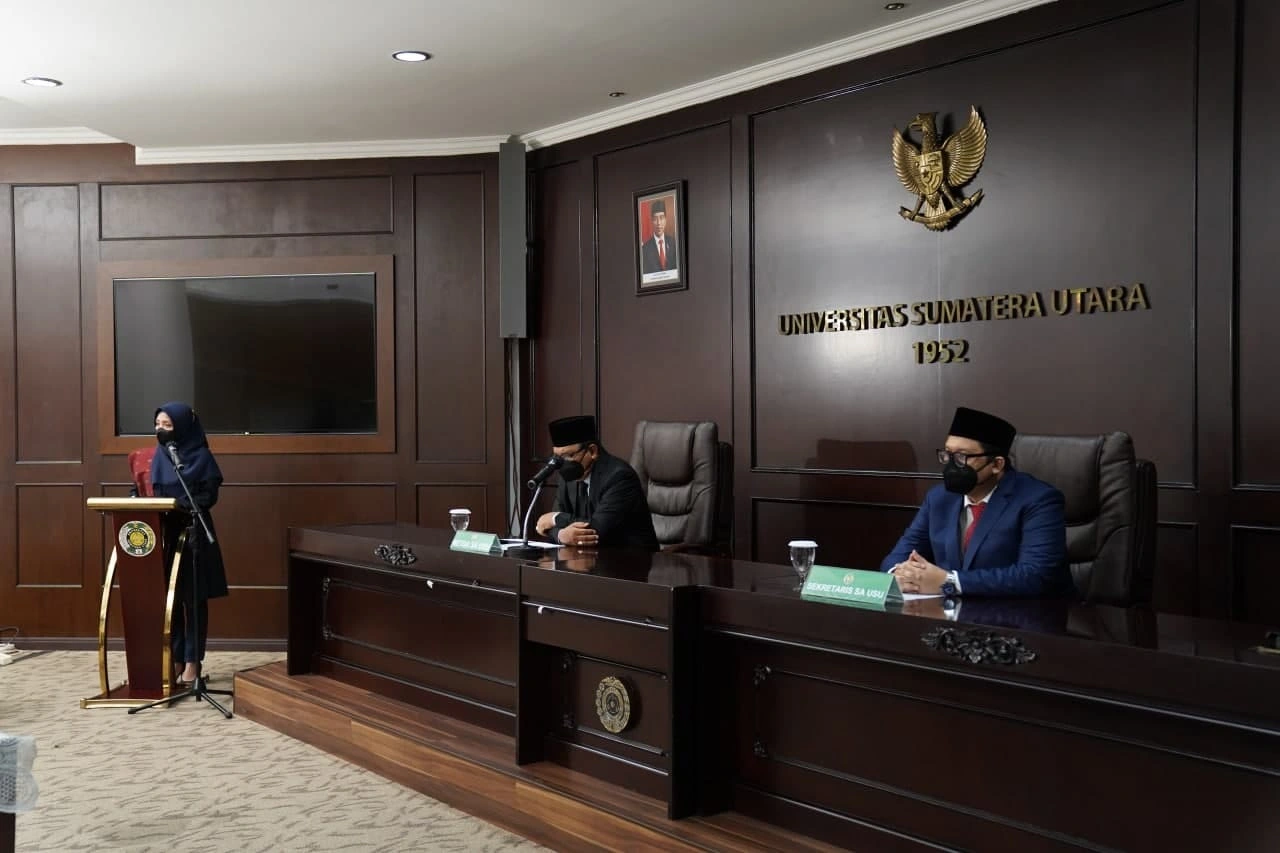
Academic Senate: The future of higher education will face many complex challenges, both structurally and culturally. This super complexity requires universities to develop 4 elements of capacity: reframing rapid change, understanding and being critical of the diversity of knowledge demands, adapting so that individuals feel comfortable in uncertainty, and developing the power of critical action based on priorities.
The Head of the Academic Senate-Assembly of Legal Entity State Universities (MSA PTN-BH), Prof. Dr. D A Suriamihardja, conveyed this in the Plenary Session of the MSA PTN-BH on Saturday (10/7/2021). The session was held online with USU acting as the host and was attended by the Head of the Academic Senate and teams from 12 PTN-BH in Indonesia. This session continues the MSA PTN-BH parallel session, held on January 23, 2021, and facilitated by UPI in Bandung.
According to the Head of the MSA PTN-BH, a new formulation that is sufficient for competency-based learning and must also be able to develop capacity in the learning process is needed. This interest loosens the tightness of the study program curriculum towards Merdeka Belajar Kampus Merdeka.
"During this pandemic, we have recorded various roles and products of universities in fighting the pandemic. Hopefully, the industry can use these research results to produce widely. However, technical, economic, and environmental feasibility tests are needed, in addition to adjusting to the demands of the times and the market. Universities and the industrial world have realized that there are gaps that must be reduced by both parties and take a serious approach to jointly utilize the potential of human resources and existing facilities for the progress of the nation and state," he explained.
According to him, there is still a long way to go to rank among the world's best. An important aspect of the research is academic reputation, namely the extent to which our universities are flexible in the eyes of the world, the number of citations of published articles, and the number of international students they have. Strengthening academic reputation in higher education requires several efforts, such as promoting educational cooperation, research cooperation, and scientific meetings at the national and international levels.
Previously, the Head of the Academic Senate of Universitas Sumatera Utara, who was also the Head Organizer of the Plenary Session of MSA PTN-BH, Prof. Dr. Suwarto, S.H., M.H., stated that the forum presented by the General Director of Higher Education, Prof. Ir. Nizam, M.Sc., DIC, Ph.D., IPU, Asean Eng, as the keynote speaker and Director of Resources Director General of Higher Education,, Dr. Mohammad Sofwan Effendi, M.Ed., and Deputy Head of MSA PTN-BH, Prof. dr. Djoko Santoso, Sp. PD, Ph.D., K-GH FINASIM, as the lighter, is an effort made to open space for discussion in doing many things in line with the implementation of Merdeka Belajar Kampus Merdeka. The Plenary Session took the theme "Strengthening Commitment to the Implementation of Free Learning and Independent Learning, Reducing the Gap between University and Industrial Culture, and Promoting Cooperation in Achieving World Class University."
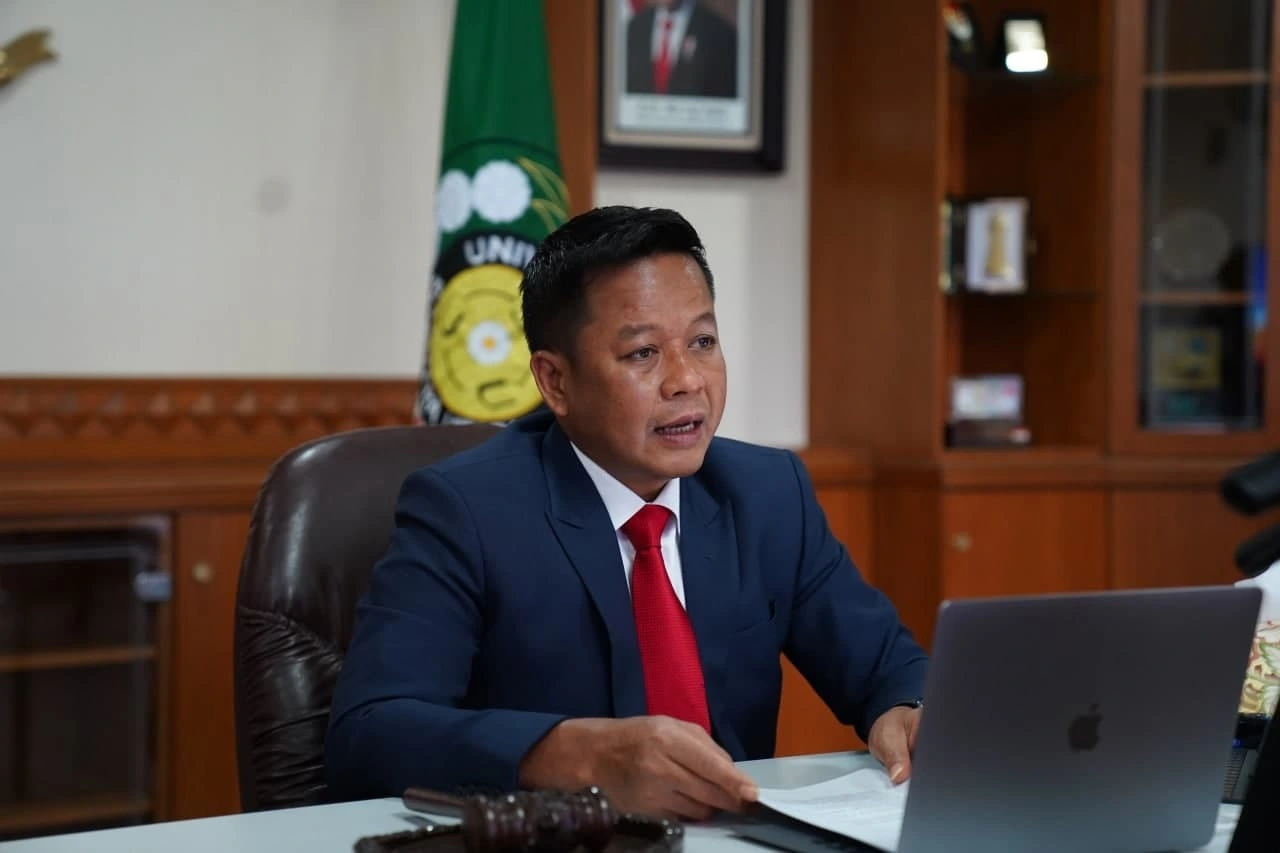
USU Rector Dr. Muryanto Amin, S.Sos., M.Si., in his remarks that officially opened the session, expressed his appreciation for organizing the activity. In addition, he reminded us that many things must be discussed seriously to express the desire of universities to translate the synergy and collaboration of universities and the industrial world, where between the two parties, there are very basic differences about the final goals to be achieved. The industrial world, with its main objectives based on commercial and income-based, is now asked to join hands and synergize fully with the world of higher education based on the academic field and non-profit activities. This fundamental difference certainly requires serious effort and thought to unite it as blended learning and achieve one goal, namely creating superior, ready-to-use, competitive human resources in line with the increasingly complex needs of the world of work.
"The output that industry wants to achieve is more dominant in the form of profit or material gain. Meanwhile, universities rely on multi-benefits that are not only in the form of material things. Benefit for life, both in the broad and narrow sense, is the main goal of various academic activities and tri dharma carried out by universities. So, to reduce the gap, we must translate united perceptions and steps to improve the quality of human resources produced by universities. Internships, research, downstream of innovative products, and inviting practitioners to teach are some examples universities can propose to transform the tri dharma activities of higher education that can be juxtaposed with the wants and needs of the industrial world," he said.